

Why Donor Reports Need Video, Not Just PDFs
Discover how a donor reporting video improves donor communication, beneficiary storytelling, transparency, and nonprofit impact reporting.
By Video Force Team
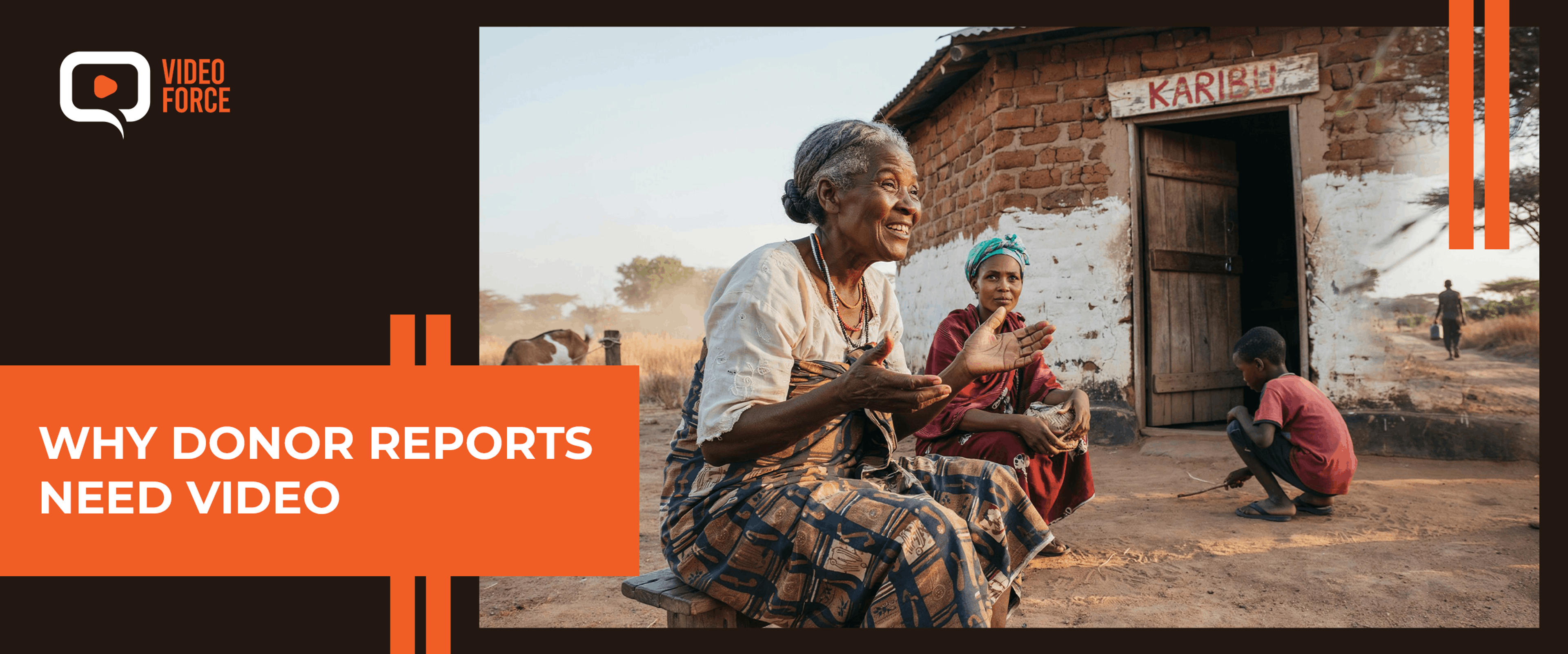
Traditional donor reports have long relied on static PDFs filled with programme summaries, financial data, and monitoring metrics.
While these reports remain important for compliance and documentation, they often fail to create an emotional connection and donor engagement.
This is why the rise of the donor reporting video is transforming nonprofit communication. Organizations are increasingly using visual storytelling to help donors see the real impact of their contributions instead of simply reading statistics on paper.
A well-produced donor reporting video combines transparency, storytelling, and accountability into a format that is more engaging, memorable, and effective than traditional reporting alone.
The Evolution of Donor Communication

Donor communication is about keeping supporters informed, connected, and valued throughout their relationship with an organization.
By making donors feel heard and demonstrating the impact of their contributions, nonprofits build trust, encourage ongoing support, and prevent lapses in giving.
Donors increasingly expect organizations to communicate impact in ways that are visual, transparent, and emotionally engaging.
Digital Content Consumption Has Changed
Research from HubSpot shows that video remains one of the most consumed forms of online content, with audiences retaining significantly more information from video than text-based communication.
This shift in digital behaviour is one of the major reasons why donor reports need video, not just PDFs, has become a growing conversation among NGOs and development organizations.
Donors Want More Than Statistics
While data is important, numbers alone rarely inspire long-term emotional investment. Donors want to understand:
Who benefited
How lives changed
What challenges are communities facing
Why the programme mattered
An engaging impact video helps bring these stories to life in a way that written reports cannot achieve alone.
The benefits of Using Videos in Donor Reporting
Traditional PDF reports communicate information, but videos communicate emotion.
A donor reporting video helps organizations create stronger donor communication by showing real stories, real communities, and real impact. Videos make reporting more engaging, memorable, and emotionally compelling than static PDFs.
Beneficiary Storytelling Makes Impact Real
Effective beneficiary storytelling transforms programme data into human experiences. Whether it is a student sharing how scholarship support changed their future or a farmer explaining improved harvests, these authentic stories help donors emotionally connect with a project.
Visual Storytelling Improves Message Retention
Studies suggest people retain video content far better than written information. A donor may skim through a 20-page report, but a short impact documentary can leave a lasting impression within minutes.
This is another major reason why donor reports need video, not just PDFs is becoming increasingly important across the nonprofit sector.
Visual Storytelling Improves Message Retention
People retain visual content far better than written information. While donors may skim through lengthy reports, a short impact documentary can communicate impact quickly and leave a lasting impression.
Video Provides Visual Accountability
A donor reporting video allows donors to observe field activities, see completed projects, and hear direct community feedback. This visible accountability strengthens trust and improves transparency.
Real Footage Creates Authenticity
Authentic field footage often feels more trustworthy than overly polished marketing content. Organizations that invest in nonprofit video production can communicate their impact with greater honesty, emotional depth, and credibility.
Programme Reporting Assets Have Long-Term Value
Videos can be reused across donor presentations, fundraising campaigns, annual reports, and social media platforms. This makes programme reporting assets more valuable and versatile than traditional PDFs alone.
Choosing the Right Nonprofit Video Production Partner
Creating successful donor reporting videos requires more than simply filming activities. Organizations need storytelling expertise, strategic communication, and ethical content production to ensure the final content connects with donors and accurately represents communities.
Experience in Development Communication Matters
An effective production partner should understand:
NGO communication objectives
Ethical beneficiary storytelling
Donor communication strategies
Development sector reporting standards
Community-sensitive filming approaches
This ensures the final content aligns with both donor expectations and community dignity while strengthening donor communication.
Strong Storytelling Creates Emotional Connection
A good donor reporting video should do more than present information. It should tell meaningful stories that help donors emotionally connect with programme outcomes and community impact.
Professional Storytelling Improves Donor Engagement
High-quality nonprofit video production combines:
Emotional storytelling
Clear messaging
Professional editing
Authentic interviews
Strong visual documentation
When done correctly, video reporting strengthens donor relationships and increases long-term engagement.
Look for Authentic Beneficiary Storytelling
Authenticity is essential in donor communication. The right production partner should focus on real stories, honest interviews, and respectful community representation rather than overly scripted content.
Assess Their Ability to Produce Programme Reporting Assets
An experienced video production team should be able to create versatile programme reporting assets that can be used across:
Donor presentations
Fundraising campaigns
Annual reports
Social media platforms
Stakeholder meetings
This increases the long-term value of the content produced.
Quality and Reliability Matter
Organizations should also evaluate:
Previous nonprofit video projects
Production quality
Turnaround timelines
Communication process
Ability to work in field environments
Reliable nonprofit video production partners help ensure donor reporting projects are completed professionally and on schedule.
Choose a Partner That Understands Impact Communication
The best production partners understand how to balance storytelling, transparency, and accountability. They know how to create impact video content that strengthens trust while helping organizations communicate measurable results effectively.
Conclusion
Donor communication is becoming more visual, engaging, and story-driven. While PDFs are still important for reporting and documentation, videos help organizations communicate impact in a more emotional and memorable way.
A strong donor reporting video improves transparency, strengthens donor trust, and helps supporters connect with the real stories behind a programme.
For nonprofits looking to create impactful donor communication content, Video Force is the ideal partner for professional nonprofit video production, impact documentaries, beneficiary storytelling, and programme reporting assets.
Contact Video Force at +254701850850, email [email protected] , or visit us at The Westwood Office, 6th Floor 6A, Comply Guide Advisory, Westlands, Nairobi, Kenya.